The highest protein vegetable is edamame, with about 12 g per 100 g cooked. Green peas come next at about 5 g, then spinach, artichokes, sweet corn and Brussels sprouts at around 3 g. Most vegetables have only 1 to 3 g per 100 g, so they support a protein target rather than meet it. Check your own target with the macro calculator and the TDEE calculator.
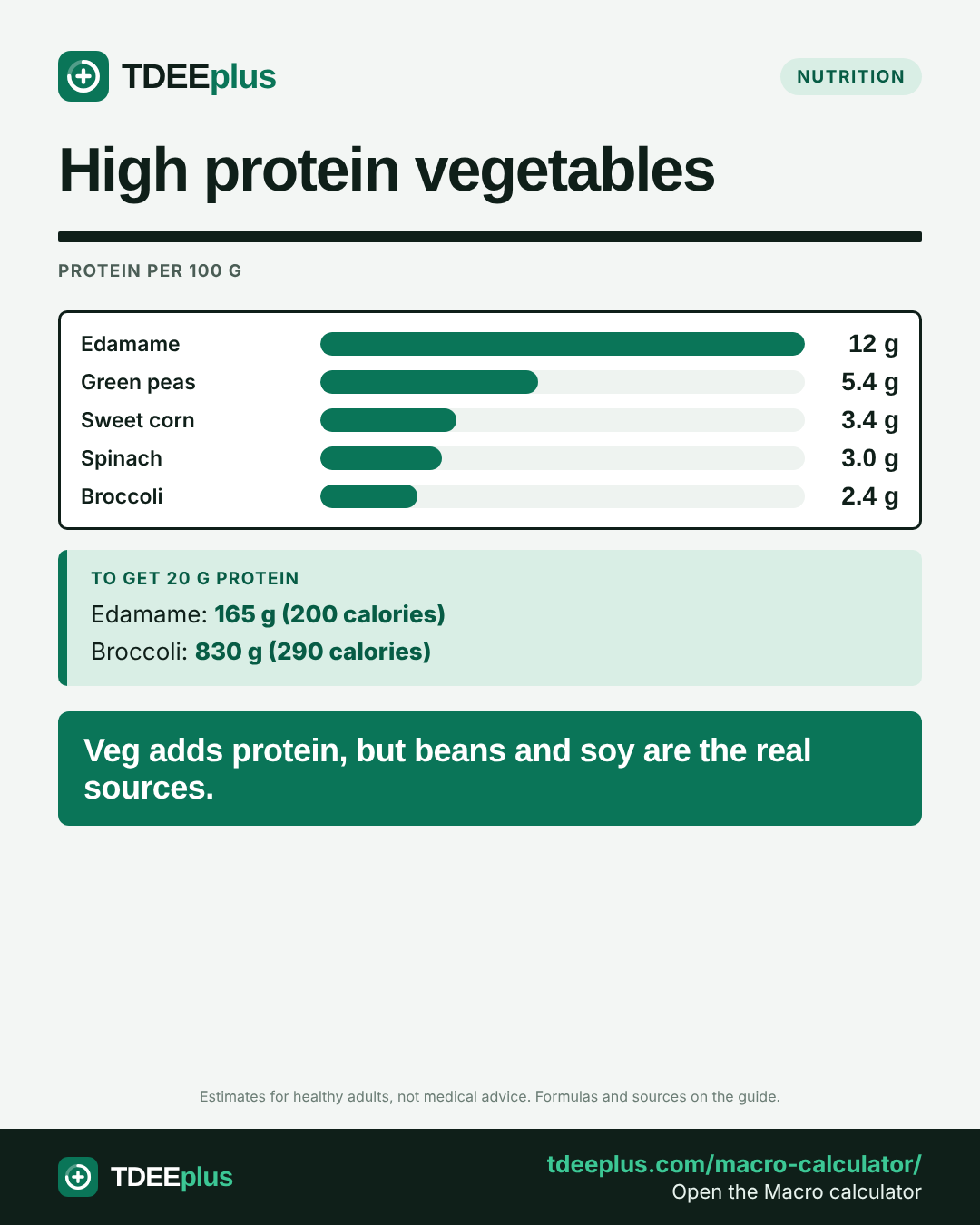
The ranked list
Values are per 100 g of boiled or cooked vegetable and are rounded from USDA FoodData Central. Protein per 100 calories shows how efficient each one is.
| Vegetable | Protein per 100 g | Calories per 100 g | Protein per 100 cal |
|---|---|---|---|
| Edamame, shelled | about 12 g | about 121 | about 10 g |
| Green peas | about 5.4 g | about 84 | about 6.4 g |
| Sweet corn | about 3.4 g | about 96 | about 3.5 g |
| Spinach | about 3.0 g | about 23 | about 13 g |
| Artichoke | about 2.9 g | about 53 | about 5.5 g |
| Brussels sprouts | about 2.6 g | about 36 | about 7 g |
| Broccoli | about 2.4 g | about 35 | about 7 g |
| Asparagus | about 2.4 g | about 22 | about 11 g |
| Kale | about 1.9 g | about 36 | about 5 g |
| Green beans | about 1.9 g | about 35 | about 5.4 g |
| Potato, boiled | about 1.9 g | about 87 | about 2 g |
Compare these with legumes, which are not strictly vegetables but sit in the same part of the shop: cooked lentils have about 9 g per 100 g and cooked black beans about 9 g (see the high protein grocery list).
The real high-protein plant foods
| Food (cooked unless stated) | Protein per 100 g |
|---|---|
| Tempeh (raw weight) | about 19 g |
| Edamame | about 12 g |
| Lentils | about 9 g |
| Chickpeas | about 9 g |
| Black beans | about 9 g |
| Quinoa | about 4.4 g |
Legumes and soy foods deliver two to four times the protein of any other vegetable, with the fibre to match. If you are building a plant-based plan, these are your base and vegetables are the supporting cast.
A reality check
This is why high-protein plant eaters build meals around soy foods (tofu, tempeh, edamame), legumes, whole grains and seeds, with vegetables for volume. The 2025–2030 US guidelines advise 1.2 to 1.6 g of protein per kg body weight for adults; for an 80 kg person that is 96 to 128 g a day, so vegetables alone would not get you there. See how much protein do you need.
Combining plant proteins
- Mix over the day. Grains tend to be lower in lysine, and legumes lower in methionine. Eating both through the day covers your amino acid needs. You do not have to combine them at one meal.
- Include soy. Soy is a complete protein.
- Eat enough total protein. Plant proteins are slightly less digestible on average, so aim a little higher if your diet is fully plant-based.
Meal ideas
- Edamame and brown rice bowl with broccoli and sesame: about 20 g protein.
- Pea and spinach omelette or tofu scramble.
- Lentil soup with kale and a slice of whole-grain bread.
- Artichoke and white bean salad with olive oil and lemon.
- Plain Greek yoghurt with raw vegetable sticks and a squeeze of lemon: about 17 g protein for a snack.
Why they still matter
Vegetables bring fibre, potassium, vitamins and volume, and they make meals filling for few calories (high volume, low calorie foods, highest fibre foods). For an overall plan, see what is a balanced diet.
Find your protein target, then plan plant-based meals around it.
Open the macro calculatorFrequently asked questions
Which vegetable has the most protein?
Can I get enough protein from vegetables?
Are plant proteins complete?
Is spinach really high in protein?
Are beans and lentils vegetables?
Keep reading
Sources
- U.S. Department of Agriculture, Agricultural Research Service. FoodData Central. fdc.nal.usda.gov. Values in this guide are rounded from USDA entries for the foods named; brands and preparation change them.
- U.S. Department of Agriculture and U.S. Department of Health and Human Services. Dietary Guidelines for Americans, 2025–2030. Released January 2026. dietaryguidelines.gov.
- Jäger R, Kerksick CM, Campbell BI, et al. International Society of Sports Nutrition Position Stand: protein and exercise. J Int Soc Sports Nutr. 2017;14:20. PubMed 28642676