A large egg contains about 6.3 g of protein. Sizes range from about 4.8 g in a small egg to nearly 8 g in a jumbo, and the protein is split between the white (about 3.6 g) and the yolk (about 2.7 g). To see how that fits your daily goal, set a target with the macro calculator after finding your calories with the TDEE calculator.
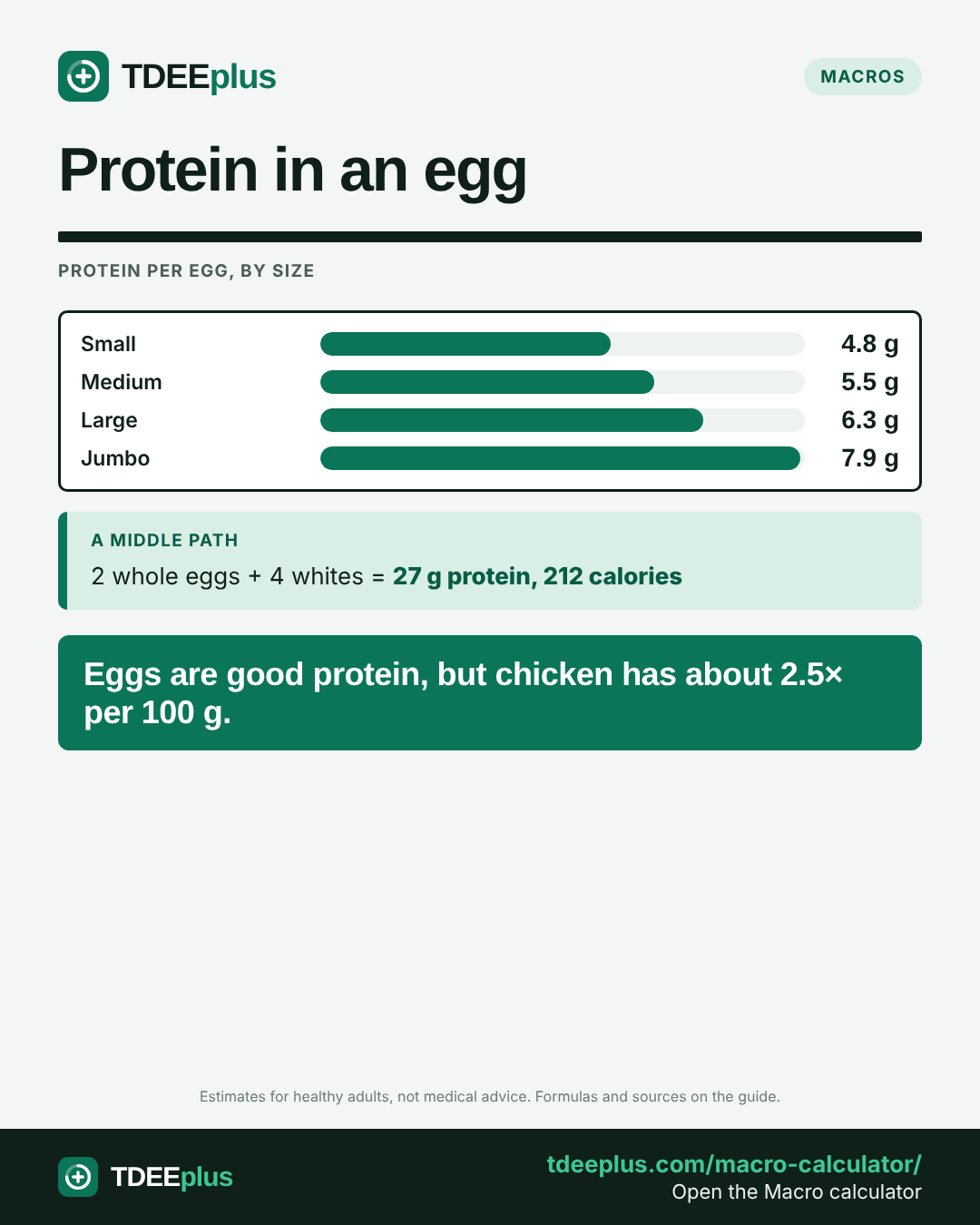
Protein by egg size
| Egg size | Edible weight | Protein | Calories |
|---|---|---|---|
| Small | about 38 g | 4.8 g | 54 |
| Medium | about 44 g | 5.5 g | 63 |
| Large | about 50 g | 6.3 g | 72 |
| Extra large | about 56 g | 7.0 g | 80 |
| Jumbo | about 63 g | 7.9 g | 90 |
Figures are rounded from USDA data of about 12.6 g of protein per 100 g of whole egg. Calories are covered in more detail in how many calories are in an egg.
White versus yolk
- Egg white (large, about 33 g): about 3.6 g protein and 17 calories.
- Egg yolk (large, about 17 g): about 2.7 g protein, 55 calories and 4.5 g fat.
The white is a nearly pure protein, so it offers the most protein for the fewest calories: roughly 21 g per 100 calories, compared with about 9 g per 100 calories for a whole egg. The yolk carries the fat-soluble vitamins and choline, so most people do better using whole eggs, with extra whites when they want more protein for fewer calories.
How many eggs for your protein goal?
| Protein goal | Whole large eggs | Calories | Or egg whites |
|---|---|---|---|
| 12 g | 2 | 144 | 3 to 4 |
| 20 g | 3 to 4 (about 3.2) | about 230 | about 5 to 6 |
| 30 g | about 5 | about 360 | about 8 |
| 40 g | about 6 to 7 | about 450 to 500 | about 11 |
Egg protein quality
Egg protein is a complete protein: it contains all nine essential amino acids in good proportions and is highly digestible. It is often used as a reference for protein quality. That makes eggs a useful part of a plan to build or keep muscle, especially if you eat several protein foods across the day (how much protein do you need). Research on muscle-building suggests spreading protein across meals in doses of roughly 0.25 to 0.4 g per kg of body weight rather than eating it all at once (see the high protein grocery list).
Eggs versus chicken and other foods
| Food | Amount | Protein | Calories |
|---|---|---|---|
| Chicken breast, cooked, skinless | 100 g | 31 g | 165 |
| Chicken breast, cooked, skinless | 1 breast (about 170 g) | about 53 g | about 284 |
| Chicken thigh, cooked, skinless | 100 g | about 25 g | about 209 |
| Egg, large | 1 | 6.3 g | 72 |
| Greek yoghurt, plain nonfat | 170 g | about 17 g | about 100 |
Per 100 g, cooked chicken breast has about two and a half times the protein of an egg (31 g against 12.6 g), because an egg carries more fat and water while cooked breast is mostly protein. For protein per calorie and price, chicken wins; for convenience and nutrients, eggs are hard to beat. The best plan uses both. Our macro counting grocery list shows how to mix them, and what to eat after a workout uses eggs in practical meals.
A note on raw eggs
Raw and undercooked eggs can carry salmonella, and the protein in raw egg is also digested less completely than in cooked egg. Cook eggs until the white and yolk are firm, and use pasteurised eggs for recipes that call for raw egg, such as home-made mayonnaise or shakes. Pregnant people, older adults and anyone with a weakened immune system should be especially careful.
Practical tips
- Batch-boil a dozen at the start of the week for a ready protein snack.
- Cook with a measured teaspoon of oil, not a splash.
- Add vegetables to an omelette to raise fibre (highest fibre foods).
- If you have high LDL cholesterol or heart disease, ask your doctor how many yolks suit you.
Set a daily protein target and see how many eggs fit.
Open the macro calculatorFrequently asked questions
How much protein is in one large egg?
Is the protein in the white or the yolk?
Does cooking change the protein in an egg?
How many eggs for 30 g of protein?
Is egg protein complete?
Keep reading
Sources
- U.S. Department of Agriculture, Agricultural Research Service. FoodData Central. fdc.nal.usda.gov. Values in this guide are rounded from USDA entries for the foods named; brands and preparation change them.
- Schoenfeld BJ, Aragon AA. How much protein can the body use in a single meal for muscle-building? Implications for daily protein distribution. J Int Soc Sports Nutr. 2018;15:10.
- Jäger R, Kerksick CM, Campbell BI, et al. International Society of Sports Nutrition Position Stand: protein and exercise. J Int Soc Sports Nutr. 2017;14:20. PubMed 28642676