A good macro counting grocery list is sorted by the nutrient each food supplies, so you can fill your protein, carb and fat targets without guessing. Work out your daily numbers first with the macro calculator, built on your calories from the TDEE calculator, then use the list below to shop for them.
How to use this list
- Get your daily calories and macro grams.
- Pick two or three foods from each section that you enjoy.
- Buy for about five days at a time, and use frozen items to cover the rest of the week.
- Weigh and log for the first two weeks, then check your results against the scale (track and adjust calories).
Protein
| Food | Serving | Protein | Calories | Fat |
|---|---|---|---|---|
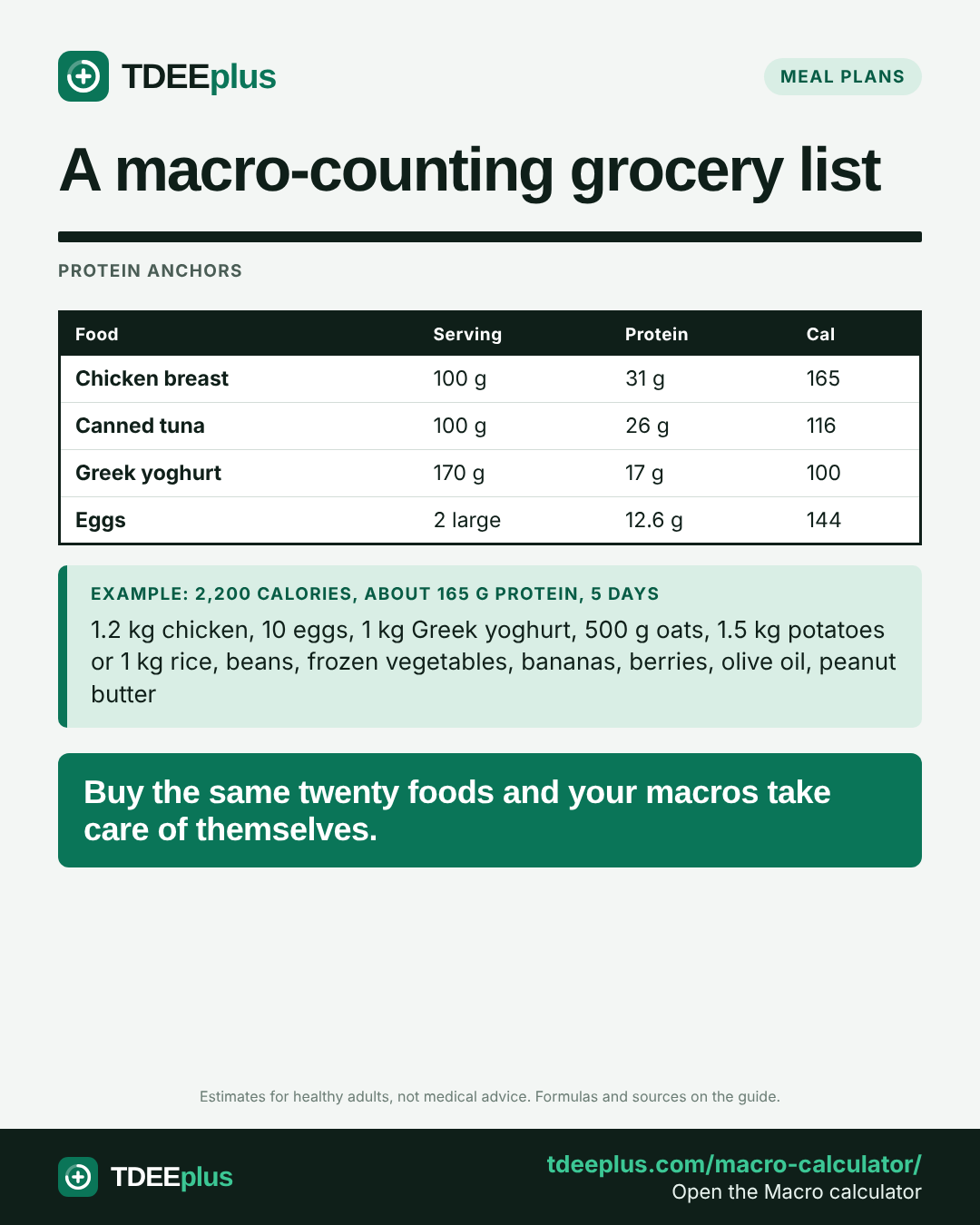
| Chicken breast, cooked | 100 g | 31 g | 165 | 3.6 g |
| Canned tuna in water, drained | 100 g | about 26 g | about 116 | about 1 g |
| Cod, cooked | 100 g | about 23 g | about 105 | about 1 g |
| Shrimp, cooked | 100 g | about 24 g | about 99 | 0.3 g |
| Eggs, large | 2 | 12.6 g | about 144 | 9.5 g |
| Greek yoghurt, plain nonfat | 170 g (6 oz) | about 17 g | about 100 | under 1 g |
| Cottage cheese, low-fat | ½ cup (113 g) | about 14 g | about 81 | about 1 g |
| Lentils, cooked | 1 cup | about 18 g | about 230 | under 1 g |
| Edamame, shelled | 1 cup | about 18 g | about 188 | about 8 g |
| Milk, 2% | 1 cup | about 8 g | about 122 | about 5 g |
Compare the protein per calorie. Chicken breast gives about 19 g per 100 calories, shrimp about 24 g, nonfat Greek yoghurt about 17 g, whole eggs about 9 g. Aim for lean sources most of the time and keep richer ones such as whole eggs or fatty fish for variety. The high protein grocery list goes deeper on protein per serving.
Carbohydrates
| Food | Serving | Carbs | Calories | Fibre |
|---|---|---|---|---|
| Rolled oats, dry | ½ cup (40 g) | 27 g | about 150 | 4 g |
| Brown rice, cooked | 1 cup (about 195 g) | about 46 g | about 218 | about 3.5 g |
| Potato, boiled | 150 g | about 30 g | about 130 | about 2.7 g |
| Banana, medium | 1 (118 g) | 27 g | 105 | 3 g |
| Whole-wheat bread | 1 slice (about 30 g) | about 13 g | about 75 | about 2 g |
| Black beans, cooked | 1 cup | about 41 g | 227 | 15 g |
| Blueberries | 1 cup | about 21 g | about 84 | about 3.6 g |
Beans and lentils count as both carbs and protein, which is why they are the best value on a macro list. Pick whole grains and fruit for fibre (highest fibre foods) and keep refined options for when you want them.
Fats
| Food | Serving | Fat | Calories |
|---|---|---|---|
| Olive oil | 1 tbsp (13.5 g) | 13.5 g | about 119 |
| Almonds | 1 oz (28 g) | about 14 g | 164 |
| Peanut butter | 2 tbsp (32 g) | about 16 g | about 188 |
| Avocado | half (about 100 g) | about 15 g | about 160 |
| Salmon, cooked | 100 g | about 12 g | about 206 |
Fat is 9 calories per gram, so it is the easiest macro to overshoot. Measure oils and nut butters; portion control matters most here. For which fats to favour, see saturated vs unsaturated fat.
Vegetables and basics
Buy plenty of vegetables (fresh or frozen), such as broccoli, spinach, peppers, tomatoes and cucumbers, since they add volume, fibre and micronutrients for very few calories. Stock herbs, spices, mustard, vinegar and hot sauce: they add flavour with almost no macros. Check the labels on sauces, dressings and drinks, where calories hide (how to read a nutrition facts label).
A sample five-day shop, matched to a plan
Once your list is set, a balanced plate keeps variety in the mix.
Get your daily protein, carb and fat grams before you shop.
Open the macro calculatorFrequently asked questions
What should be on a macro counting grocery list?
How do I shop if I do not know my macros yet?
Do I need a food scale?
Are packaged foods fine for macro counting?
How much does a macro grocery shop cost?
Keep reading
Sources
- U.S. Department of Agriculture, Agricultural Research Service. FoodData Central. fdc.nal.usda.gov. Values in this guide are rounded from USDA entries for the foods named; brands and preparation change them.
- Institute of Medicine. Dietary Reference Intakes for Energy, Carbohydrate, Fiber, Fat, Fatty Acids, Cholesterol, Protein, and Amino Acids. Washington, DC: National Academies Press; 2005 (Acceptable Macronutrient Distribution Ranges).
- U.S. Food and Drug Administration. Nutrition labeling of food, 21 CFR 101.9(c)(1): 4, 4 and 9 calories per gram of protein, carbohydrate and fat.