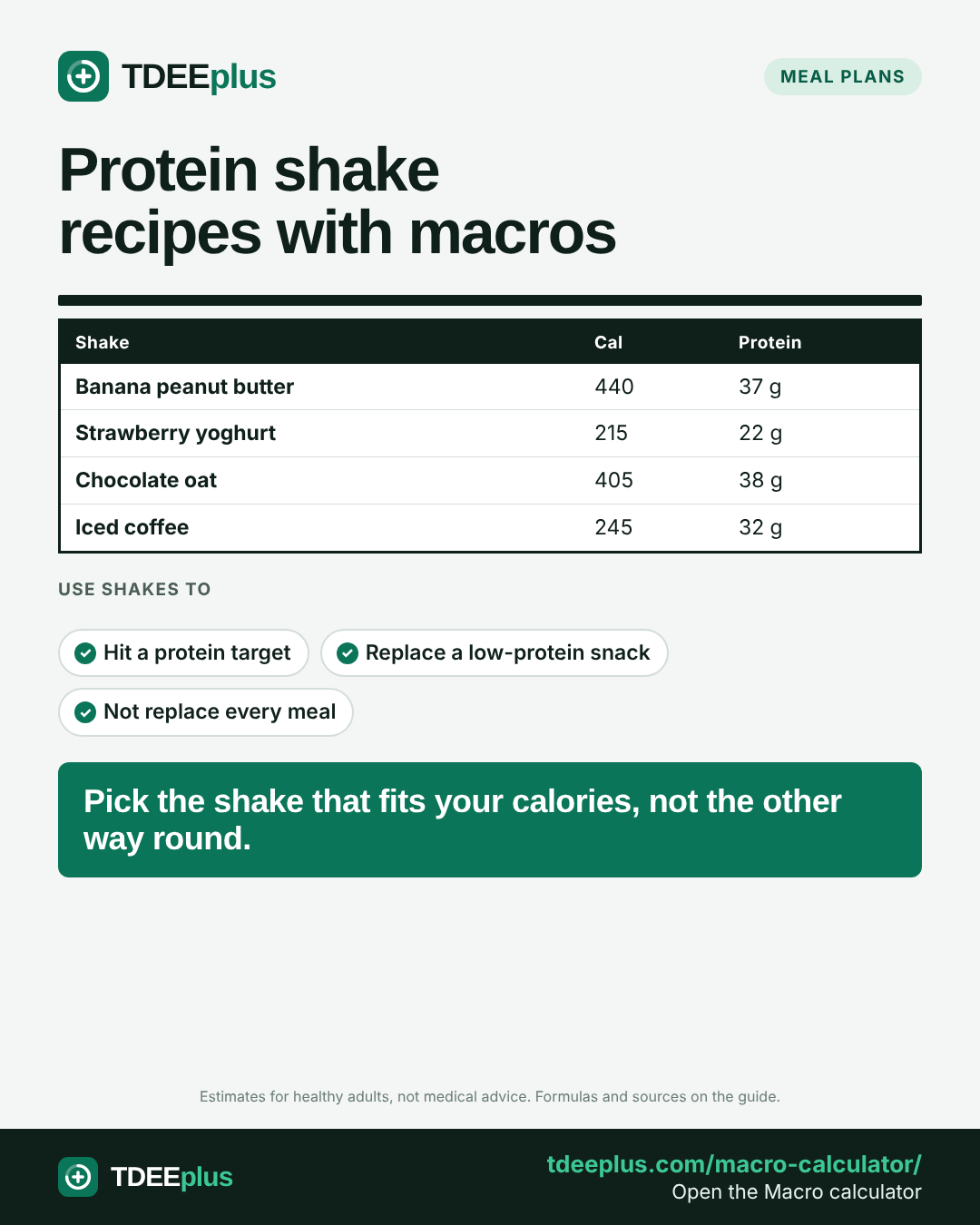
A good protein shake combines a protein source, a liquid and one or two extras for flavour and fibre. The recipes below give about 22 to 38 g of protein per serving, with calories and macros worked out so you can fit them into your plan. Set your own target with the macro calculator after finding your calories with the TDEE calculator.
Powder values are typical of a 30 g scoop of whey protein: about 120 calories, 24 g protein, 2 g fat and 3 g carbs. Brands vary, so replace these with the numbers on your own tub. All other values are rounded from USDA data.
1. Banana peanut butter shake
1 scoop whey, 1 cup 2% milk, 1 medium banana, 1 tbsp peanut butter, ice. Blend until smooth.
| Ingredient | Calories | Protein | Fat | Carbs |
|---|---|---|---|---|
| Whey, 1 scoop | 120 | 24 | 2 | 3 |
| 2% milk, 1 cup | 122 | 8 | 5 | 12 |
| Banana, medium | 105 | 1 | 0.4 | 27 |
| Peanut butter, 1 tbsp | 94 | 4 | 8 | 3 |
| Total | about 440 | about 37 g | about 15 g | about 45 g |
A good option for gaining weight or after training. Drop the peanut butter to save about 94 calories.
2. Berry Greek yoghurt shake (no powder)
170 g plain nonfat Greek yoghurt, 150 g frozen strawberries, half a cup (120 ml) of 2% milk, ice.
| Ingredient | Calories | Protein | Fat | Carbs |
|---|---|---|---|---|
| Greek yoghurt, 170 g | 100 | 17 | 0.7 | 6 |
| Frozen strawberries, 150 g | 53 | 0.5 | 0.3 | 14 |
| 2% milk, ½ cup | 61 | 4 | 2.4 | 6 |
| Total | about 215 | about 22 g | about 3 g | about 26 g |
High in protein for the calories, and a good fit for a fat-loss day. It gets thicker the more frozen fruit you add.
3. Chocolate oat shake
1 scoop chocolate whey, 1 cup 2% milk, 40 g rolled oats, 1 tbsp unsweetened cocoa powder, ice.
| Ingredient | Calories | Protein | Fat | Carbs |
|---|---|---|---|---|
| Whey, 1 scoop | 120 | 24 | 2 | 3 |
| 2% milk, 1 cup | 122 | 8 | 5 | 12 |
| Rolled oats, 40 g | 152 | 5 | 3 | 27 |
| Cocoa powder, 1 tbsp | 11 | 1 | 0.6 | 3 |
| Total | about 405 | about 38 g | about 10 g | about 45 g |
The oats add about 4 g of fibre and make it more filling, a good meal-replacement style shake.
4. Iced coffee protein shake
1 scoop vanilla whey, 1 cup cold-brew coffee, 1 cup 2% milk, ice.
| Ingredient | Calories | Protein | Fat | Carbs |
|---|---|---|---|---|
| Whey, 1 scoop | 120 | 24 | 2 | 3 |
| 2% milk, 1 cup | 122 | 8 | 5 | 12 |
| Cold-brew coffee, 1 cup | 2 | 0 | 0 | 0 |
| Total | about 245 | about 32 g | about 7 g | about 15 g |
Moderate in calories and high in protein. Mind the caffeine if you have it late in the day.
Adjust a shake to your goal
- Lower calories: use water or unsweetened almond milk instead of milk, skip nut butter and use half a banana.
- Higher calories: use whole milk, add oats, a spoon of nut butter or half an avocado.
- More fibre: add oats, chia, spinach or berries (highest fibre foods).
- Dairy-free: use soy milk (about 7 g protein per cup) or a pea or soy powder.
When and how to use shakes
Shakes are a convenience, not a requirement. Use them when whole food is not practical or after training, as covered in what to eat after a workout. Count the calories, since liquid calories do not fill you up as well as solid food (what is satiety). If you want a food-first approach, our high protein grocery list shows options. For protein targets, see how much protein you need.
These recipes are examples, not medical or dietary advice. If you have kidney disease, a food allergy or another medical condition, speak to your doctor or a dietitian first.
Check how a shake fits your daily protein, carbs and fat.
Open the macro calculatorFrequently asked questions
Do I need protein powder to make a high-protein shake?
How much protein should a shake have?
Are protein shakes good for weight loss?
Are protein powders safe?
Should I avoid high-protein shakes if I have kidney disease?
Keep reading
Sources
- U.S. Department of Agriculture, Agricultural Research Service. FoodData Central. fdc.nal.usda.gov. Values in this guide are rounded from USDA entries for the foods named; brands and preparation change them.
- Jäger R, Kerksick CM, Campbell BI, et al. International Society of Sports Nutrition Position Stand: protein and exercise. J Int Soc Sports Nutr. 2017;14:20. PubMed 28642676
- Schoenfeld BJ, Aragon AA. How much protein can the body use in a single meal for muscle-building? Implications for daily protein distribution. J Int Soc Sports Nutr. 2018;15:10.
- U.S. Department of Agriculture and U.S. Department of Health and Human Services. Dietary Guidelines for Americans, 2025–2030. Released January 2026. dietaryguidelines.gov.